Bridge Concrete Foundation Assessment
CSR GeoSurveys Ltd. completed a geophysical investigation in support of an assessment of a bridge concrete foundation in Nova Scotia. The objective of the investigation was to provide information pertaining to the measurements, condition, and construction characteristics of the bridge foundation.
Survey Methods
The investigation incorporated multiple non-destructive survey methods to assess the concrete foundation, including:
- Ground Penetrating Radar (GPR): A Proceeq GP8800 high frequency system was used to identify and map near surface reinforcement, estimate reinforcement spacing and coverage, and evaluate potential subsurface concrete defects.
- Ultrasonic Pulse Velocity (UPV): A Proceq Pundit PD8050 system was utilized to evaluate concrete thickness, map reinforcement, and detect potential delamination or voids.
- Impact Echo (IE): A Proceq Pundit PI8000 system was used to estimate the foundation depth and thickness, as well as map potential fractures, delamination, or other concrete defects.
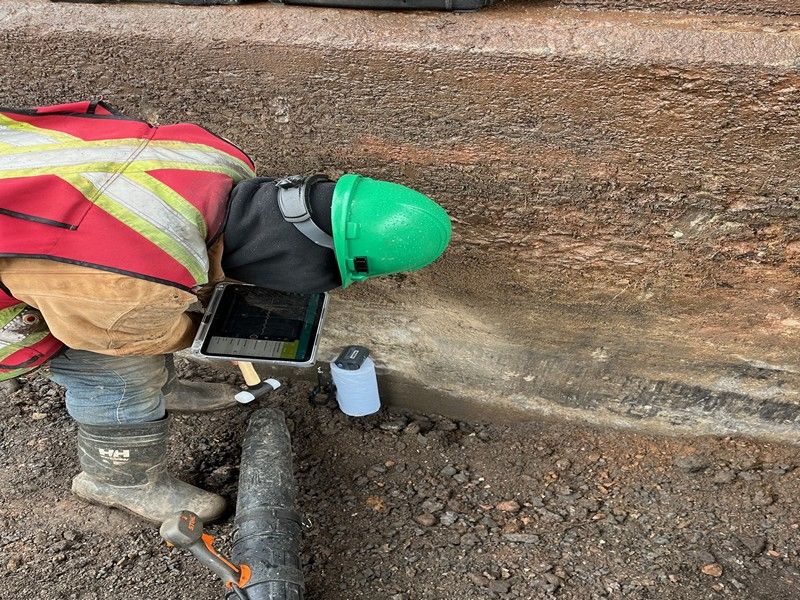
The bridge foundation was buried and required excavation prior to the geophysical investigation. Following excavation, the exposed concrete surfaces exhibited high moisture content, surface debris, and localized spalling that limited data quality and sensor coupling. Surface preparation methods, including mechanical grinding, drying, and cleaning were completed to improve data acquisition.
Data Interpretation & Results
The integrated geophysical investigation identified variations in the internal conditions and construction characteristics of the bridge concrete foundation. GPR data indicated irregular subsurface responses and provided information regarding the presence and depth of embedded structural components within the foundation, including reinforcement and anchor bolts.
UPV and IE testing were affected by the surface conditions and internal variability within the concrete structure; however, the methods indicated internal variations within the concrete foundation and provided insight into the material response and underlying support conditions. Concrete thickness measurements were successfully obtained over multiple locations on the foundation using IE.
Although site and material conditions limited portions of the investigation, the combined geophysical datasets provided valuable information regarding foundation construction, subsurface conditions, and potential areas of concern to support ongoing structural assessment and engineering evaluations.
Gallery
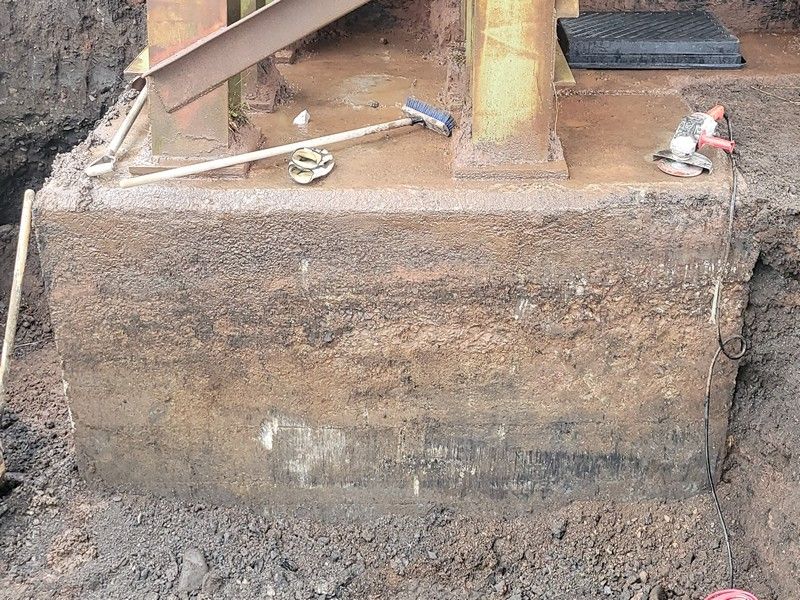
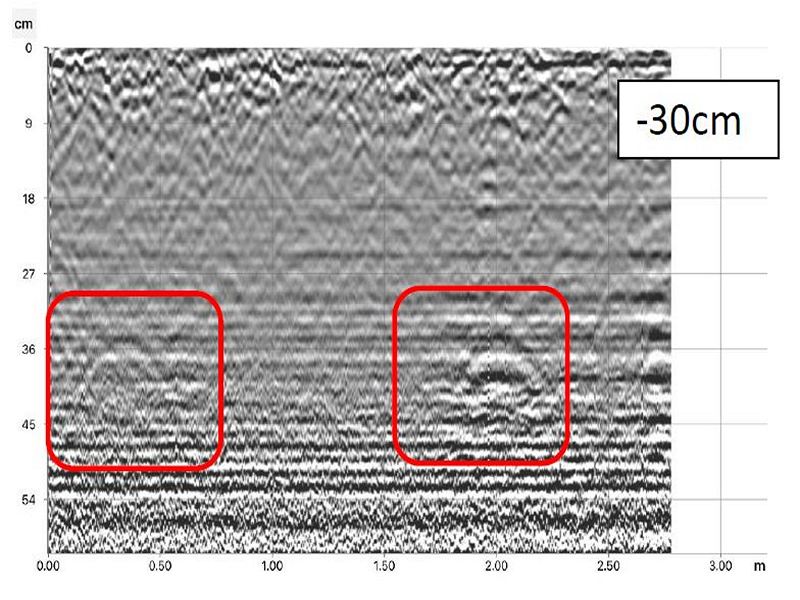
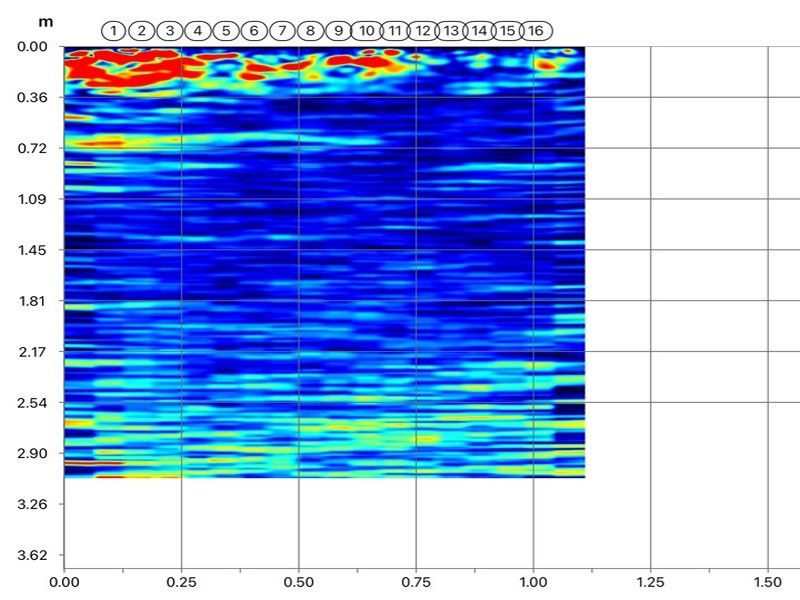
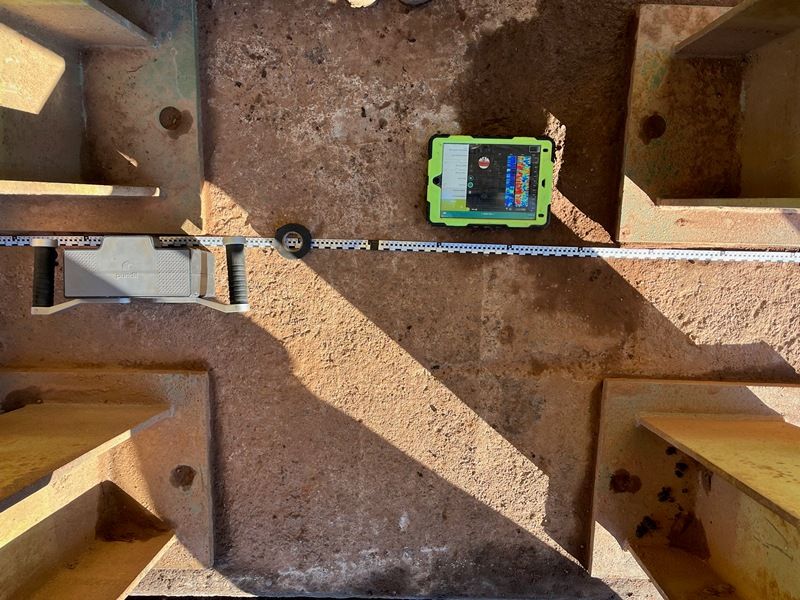
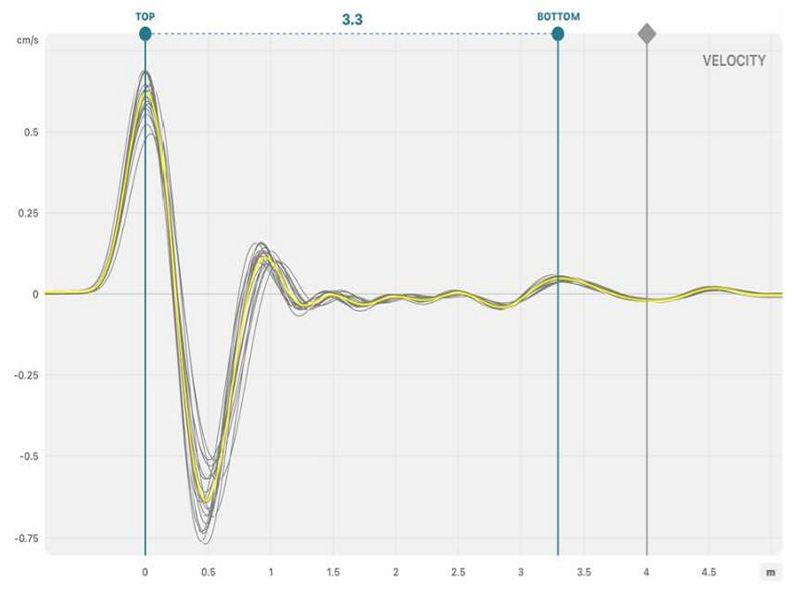
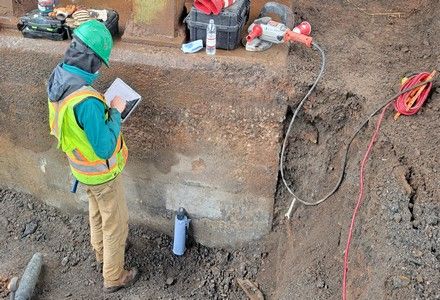
The GPR investigation identified signatures consistent with the anchor bolts securing the bridge steel bents within the upper portion of the foundation, indicating their presence and approximate penetration depth below the concrete surface.
- Large Scale Magnetic Clearance Project
- Damage Prevention Investigation
- Bridge Concrete Foundation Assessment
- Wind Farm Seismic Site Classification
- Historical Mine Subsidence Investigation
- Concrete Slab GPR Investigation
- EM61 MAPPING, DND Naval Engineering School
- EM61 MAPPING, Department of National Defence